Remote Control DC Power Supply Driving Efficient Production Line
Inefficient power management and lack of real-time control often disrupt the normal operation of modern production lines. These problems lead to downtime, inconsistent product quality, and increased operating costs. Remote-controlled DC power supplies offer a smarter and more efficient solution.
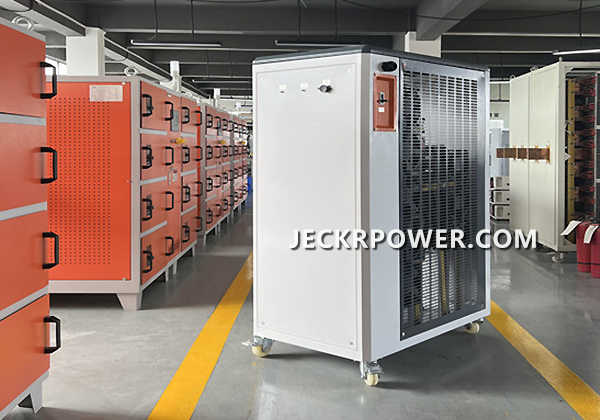
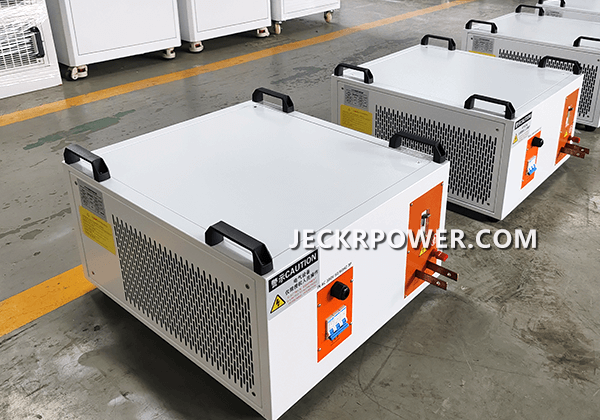
Remote-controlled DC power supplies enable centralized operation, real-time monitoring, and precise output control, thereby improving production efficiency, stability, and product quality in industrial manufacturing processes.
So, how are these systems transforming production lines? Why have they become crucial in modern industrial environments?
Why do production lines need advanced DC power supplies?
Many production lines rely on outdated power systems that lack flexibility and precision. This often leads to performance instability and difficulty in process control, especially in complex manufacturing environments.
Modern production lines require high stability, precise output, and real-time regulation capabilities, which remote-controlled DC power supplies effectively meet.
In industries such as electronics manufacturing, precise DC power supplies are crucial for processes such as etching and coating. In automotive production, a stable power supply ensures consistent solder quality and uniform surface finish. Traditional locally controlled power supplies, due to limited monitoring capabilities and the need for manual operation, struggle to meet these requirements.
How Do Remote Control DC Power Supplies Improve Operational Efficiency?
Manual operation and decentralized control reduce productivity and increase labor costs. This is particularly pronounced in large-scale or distributed production facilities.
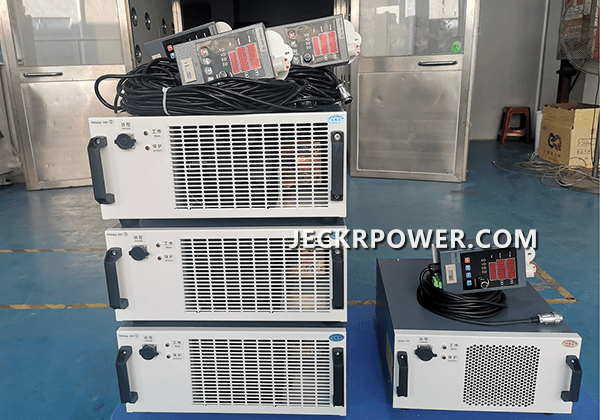
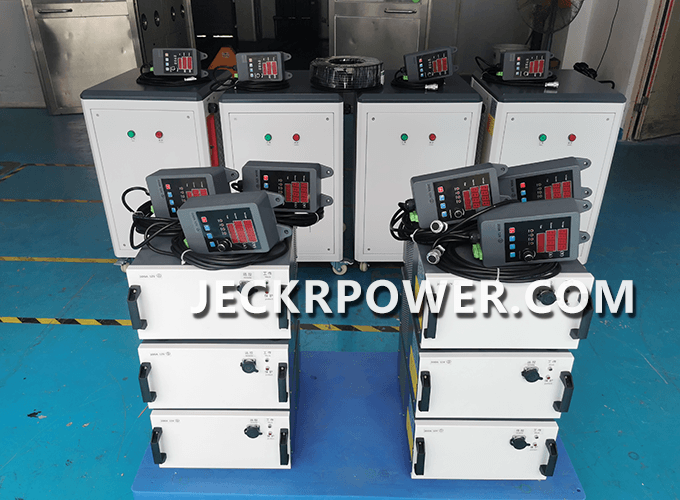
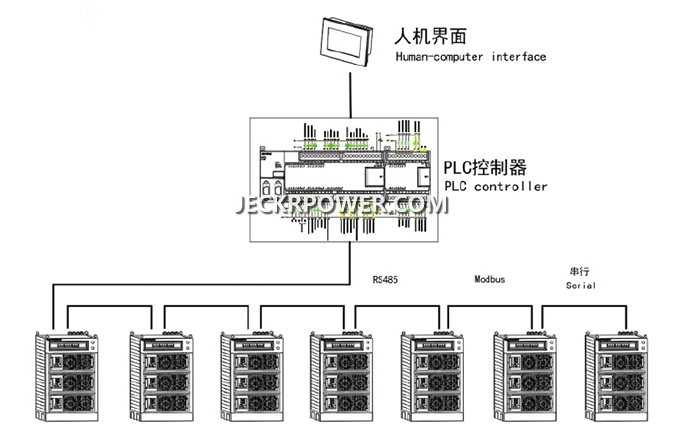
Remotely controlled DC power supplies enable centralized control and remote operation of multiple systems simultaneously, thereby improving efficiency.
Operators can monitor and adjust power parameters from a central control room or even through network-connected devices. This eliminates the need for on-site manual adjustments, significantly reducing response time and improving operational efficiency. This advantage is especially important for large industrial plants with distributed equipment.
How Does Real-Time Monitoring Enhance Production Stability?
Without real-time data, it is difficult to detect and respond to power fluctuations or equipment problems. This can lead to unexpected downtime and product defects.
Remotely controlled DC power supplies provide real-time monitoring and data acquisition capabilities, enabling operators to continuously track voltage, current, and power conditions.
By analyzing this data, manufacturers can quickly identify anomalies such as voltage fluctuations or overloads. Early problem detection facilitates preventative maintenance, reducing downtime and improving overall production reliability. Data insights also help optimize production planning and equipment utilization.
Why are the accuracy and stability of DC power supplies crucial?
Unstable power output directly impacts product quality, especially in high-precision manufacturing processes. Even minute fluctuations can lead to defects or performance degradation.
Remotely controlled DC power supplies ensure high-precision and stable output, creating a reliable electrical environment for sensitive processes.
With advanced digital control systems and high-precision sensors, these power supplies maintain stable voltage and current levels. This is critical for applications such as precision instrument manufacturing, electroplating, and surface treatment, where power quality directly affects the final product quality.
What are the practical advantages in industrial applications?
Many companies will not easily upgrade equipment until they see clear evidence of actual performance improvements. Understanding the actual benefits helps justify the investment.
Remotely controlled DC power supplies have been proven to improve productivity, reduce downtime, and enhance product quality across various industries.
For example, in an electronics manufacturing plant, a centralized power management system allows operators to monitor all equipment from a single control center. The system can quickly detect abnormal power conditions and make immediate adjustments. As a result, equipment downtime is reduced, productivity is increased, and product yield is significantly improved.
What Is the Future of Remote Control DC Power Supplies?
As industries move toward automation and digitalization, traditional power systems are no longer sufficient. Companies need smarter and more adaptive solutions.
Remote control DC power supplies are evolving with smart control, industrial communication, and predictive maintenance capabilities.
Future systems will integrate seamlessly with Industrial Internet platforms, supporting communication protocols such as Modbus and RS485. Enhanced intelligence will allow self-diagnosis, adaptive control, and fault prediction, ensuring higher reliability and reduced maintenance costs. These advancements will further support the development of smart factories.
Conclusion
Remote control DC power supplies provide centralized control, real-time monitoring, and high precision, making them essential for modern production lines. As industrial automation advances, they will play an increasingly important role in improving efficiency, quality, and operational reliability.