DC vs Pulse Power Supply for Anodizing: Which Is Better
Inconsistent anodizing quality and rising production costs often result from choosing the wrong power supply. These issues lead to defects, inefficiency, and lost competitiveness. Selecting the right anodizing power supply is the key to solving them.
DC and pulse anodizing power supplies differ in working principles, performance, and application. DC offers simplicity and low cost, while pulse provides better coating quality, efficiency, and control, making it ideal for high-performance anodizing processes.
So how do these two technologies compare in real industrial applications, and which one truly fits your production needs? Let’s explore.
What Is the Difference Between DC and Pulse Anodizing Power Supply?
Many manufacturers struggle to understand the technical differences between DC and pulse systems. This confusion often leads to incorrect equipment selection and unstable production results. Understanding their working principles is essential for making the right investment.
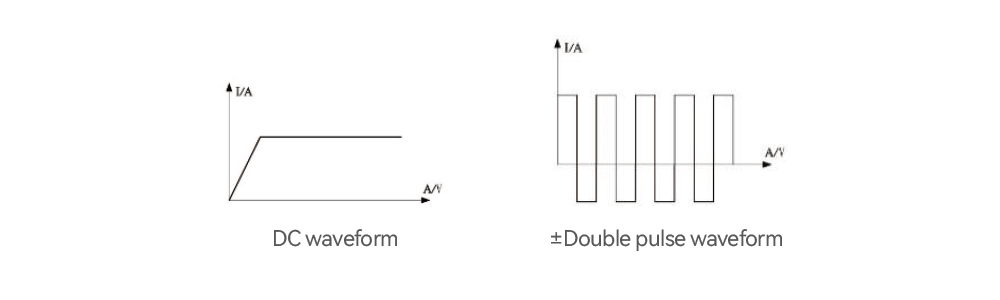
A DC power supply provides continuous current or voltage, while a pulse power supply delivers intermittent electrical signals, allowing dynamic control of the anodizing process.
In anodizing, a controlled electrical current forms an oxide layer on the metal surface. With DC systems, this process is continuous, which is simple but can lead to heat accumulation and less uniform oxide structure. Pulse systems, on the other hand, alternate between on/off cycles, enabling better control of oxidation and dissolution, improving overall coating performance.
What Are the Process Differences Between DC and Pulse Anodizing?
Understanding only the working principle is not enough. Many manufacturers still struggle to choose the right solution because they lack a clear comparison of actual process performance.
The key differences between DC and pulse anodizing power supplies lie in control precision, heat management, coating performance, and flexibility.
DC vs Pulse Anodizing Process Comparison
| Parameter | DC Power Supply | Pulse Power Supply |
|---|---|---|
| Output Mode | Continuous DC output | Intermittent pulse waveform |
| Control Precision | Basic control | High precision control |
| Heat Management | High heat accumulation | Reduced heat buildup |
| Coating Uniformity | Moderate, less effective on complex parts | Excellent, even on complex geometries |
| Coating Density | Lower density | Higher density |
| Surface Quality | Risk of defects (burning, roughness) | Smooth, defect-free surface |
| Process Flexibility | Limited | Highly flexible and adjustable |
| Energy Efficiency | Lower | Higher |
| Suitable Processes | Standard anodizing | Hard anodizing, micro-arc oxidation |
| Automation Capability | Basic | Advanced (easy integration with smart control) |
How Do DC and Pulse Power Supplies Affect Anodizing Quality?
Poor anodizing quality—such as uneven thickness or weak corrosion resistance—often results from limited power supply control. Choosing the right technology is critical.
Pulse power supplies deliver superior coating performance by enabling precise control over oxide layer thickness, porosity, and uniformity, while DC systems provide basic but less flexible results.
As shown in the comparison table above, pulse technology significantly improves coating density, surface quality, and process stability, making it ideal for high-performance anodizing applications.
Which Power Supply Is More Efficient in Production?
Production inefficiency can delay delivery schedules and reduce profitability. For project-based manufacturers, improving process efficiency is essential to stay competitive.
Pulse power supplies generally offer higher efficiency due to fast dynamic response and optimized parameter control, while DC systems are better suited for stable, high-volume production.
DC systems are simple to operate and reliable for standardized processes. However, they require more time for adjustments when production conditions change. Pulse systems can adapt quickly to different materials and geometries, reducing processing time and increasing throughput. This makes them particularly valuable for manufacturers handling complex or customized components.
What Are the Application Differences Between DC and Pulse Anodizing?
Choosing the wrong technology for your application can result in either unnecessary costs or insufficient performance. Matching the power supply to your production needs is essential.
DC power supplies are ideal for standard anodizing, while pulse power supplies are designed for high-performance and precision applications.
DC anodizing rectifier is widely used in:
- Decorative anodizing (aluminum profiles, consumer products)
- Large-scale production with cost sensitivity
- Established production lines with stable processes
Pulse anodizing rectifier is preferred for:
- Hard anodizing requiring high wear resistance
- Aerospace and automotive components
- Complex or irregular-shaped workpieces
- Advanced processes such as micro-arc oxidation (MAO)
Pulse technology also supports more environmentally friendly processes by reducing energy waste and improving process efficiency.
How Do DC and Pulse Power Supplies Compare in Cost?
Many manufacturers focus only on initial investment, overlooking long-term operational costs. This can lead to inefficient decisions.
DC power supplies have lower upfront costs, while pulse systems provide better long-term value through efficiency and quality improvements.
DC systems are more affordable and suitable for budget-sensitive projects. However, they often have higher energy consumption and cooling requirements. Pulse systems require a higher initial investment but reduce energy waste, improve yield, and lower maintenance costs. Over time, they offer a better return on investment (ROI), especially for high-end manufacturing.
Which Power Supply Should You Choose?
Choosing the wrong power supply can limit your production capabilities and market competitiveness. The right decision depends on your specific process requirements and business goals.
Choose DC power supply for cost-effective, standard anodizing; choose pulse power supply for high-performance, precision, and future-ready manufacturing.
If your production focuses on basic anodizing with stable output and tight budget control, a DC system is a reliable choice. However, if you aim to produce high-quality oxide films, handle complex components, or upgrade your process, a pulse power supply is the better investment.
As industry demands shift toward higher performance, energy efficiency, and automation, pulse technology is becoming the preferred solution for modern anodizing processes.
Conclusion
DC and pulse anodizing power supplies each have their strengths. The best choice depends on your quality requirements, production scale, and long-term goals. For advanced performance and competitiveness, pulse power supplies offer a clear advantage.