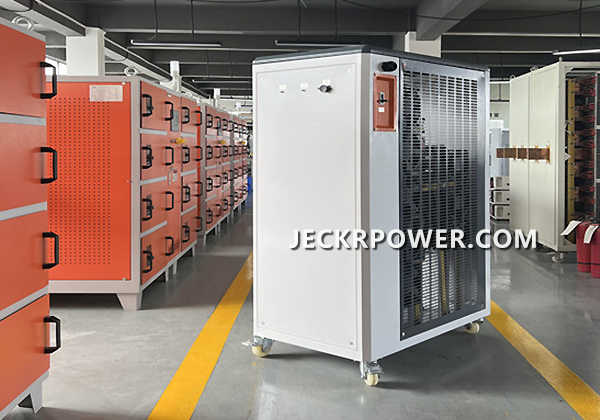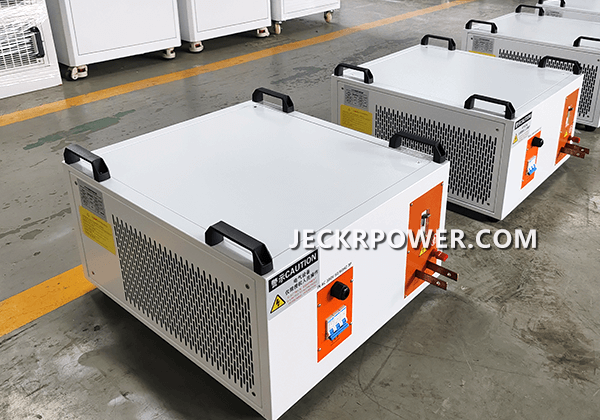
High-Frequency Power Supply: Driving Green Industrial Electrolysis
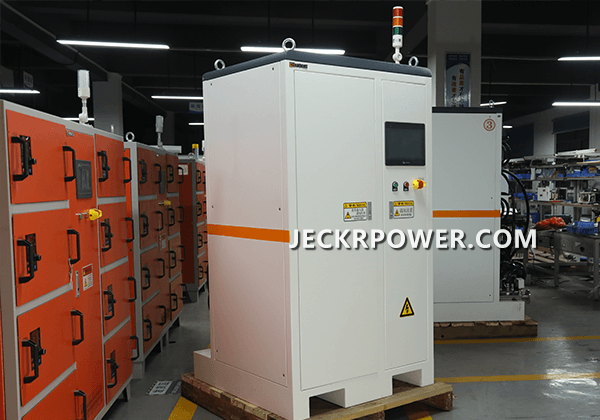
In heavy industry, electrolysis is used everywhere, playing a key role in electroplating, water treatment, hydrogen production, and metal refining. For decades, however, the power supplies behind these processes were bulky, inefficient, and highly energy-consuming.
Now, high-frequency electrolysis power supplies are changing the landscape. With conversion efficiencies above 92% and energy savings of up to 30%, this technology is more than just an upgrade — it represents a real step toward greener industrial solutions.
Technical Breakthrough: IGBT Inverter Technology
At the heart of modern high-frequency electrolysis rectifiers lies IGBT inverter technology. Unlike old silicon-controlled rectifiers (SCRs) that operate at low frequencies (50–60 Hz), high-frequency units switch at 20 kHz to 25 kHz or even higher.
Take a typical 8000A/15V high-frequency model as an example. It uses DSP-based digital PWM control, achieving pulse phase-shift resolution below 1 microsecond. The result is impressive.
- Rectification efficiency: ≥92%
- Output ripple coefficient: ≤1%
- Energy savings: 15–25% compared to traditional SCR rectifiers
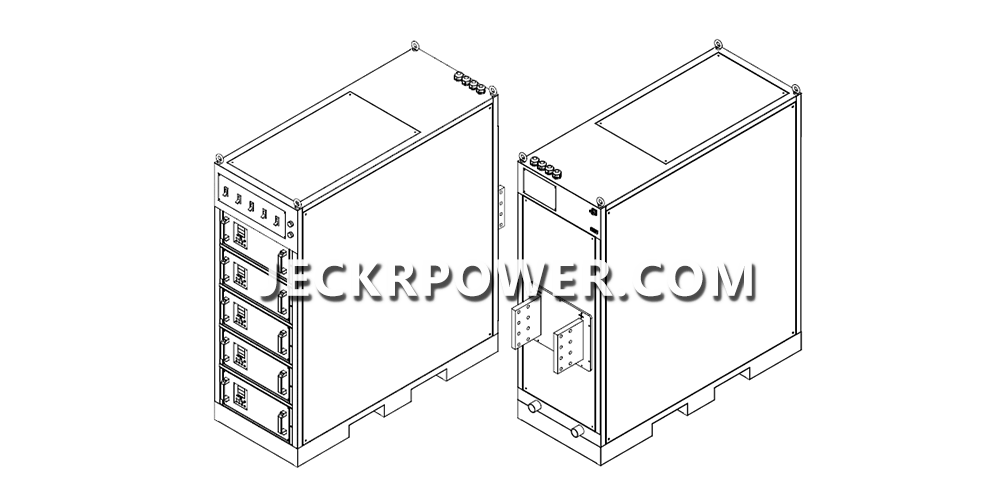
Moreover, thanks to IGBT soft-switching technology, the physical size is reduced to 1/5 to 1/8 that of an SCR unit, and weight drops to as little as 1/20 to 1/40. Yet it delivers stable DC output from 0–2000A and 0–500V — a remarkable engineering achievement.
Industry Applications: Where High-Frequency Rectifiers Stand Out
1. Electroplating
Low ripple (typically <3%) ensures uniform metal deposition. One electroplating company saw its product yield jump from 85% to 98% after switching to a high-frequency power supply.
2. Hydrogen Production via Water Electrolysis
Large currents (above 1000A) combined with high efficiency (>92%) reduce the cost of green hydrogen by as much as 25%, making renewable hydrogen more economically viable.
3. Wastewater Treatment
With corrosion-resistant design and intelligent control, high-frequency rectifiers precisely remove heavy metal ions and organic pollutants. A sewage treatment plant reported a 40% increase in treatment efficiency after installation.
4. Hydrometallurgy and Electropolishing
Dual constant-current / constant-voltage modes allow seamless adaptation to different process requirements, from copper refining to surface finishing.
Intelligent and Safe: Next-Generation Features
Today’s high-frequency electrolysis power supplies go far beyond simple AC-to-DC conversion. They integrate:
- Smart control systems supporting local/remote operation, with RS485, Modbus, and PLC integration for fully automated production lines.
- Comprehensive protection covering AC phase loss, over/under voltage, output overcurrent, short circuit, instantaneous overload, and more — up to 12 separate safety mechanisms.
- Soft-start adjustable from 0 to 180 seconds, preventing current shock to the workpiece.
- High-precision regulation with constant-current/constant-voltage accuracy ≤ ±1%.
Some advanced models even use nanocrystalline core transformers with no-load losses below 2%, and a service life exceeding 10 years.
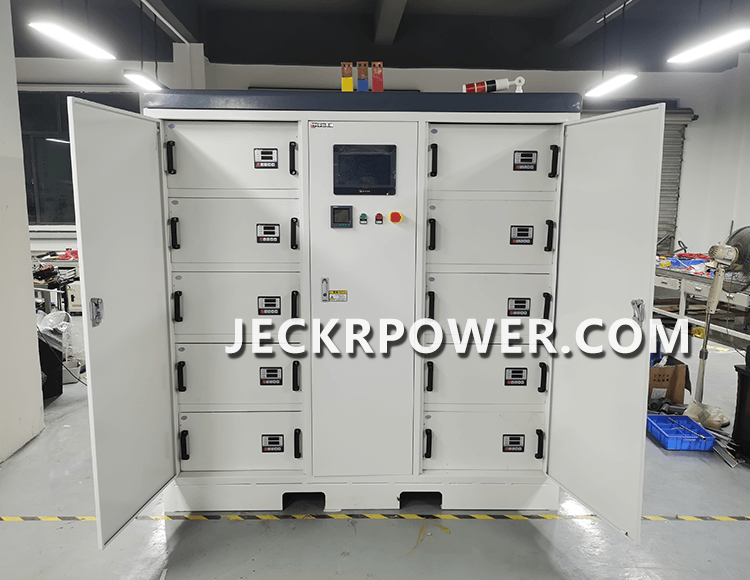
Real-World Savings: Over $50,000 Per Year in Electricity
Consider an aluminum profile plant that replaced its old rectifiers with high-frequency units for electrolytic coloring.
- Annual electricity saved: 350,000 kWh
- Annual cost reduction: over $40,000 USD (at typical industrial rates)
In a large-scale copper refining project, switching to high-frequency power supplies cut electricity consumption by 180 kWh per ton of copper and reduced CO₂ emissions by 2,000 tons per year. That’s both good business and good for the planet.
The Future: Modular, Digital, and Customized
As Industry 4.0 advances, high-frequency electrolysis power supplies are moving toward:
- Modular design – multiple units can be paralleled to achieve very high currents (10,000A+) for large-scale electrolysis lines.
- Digital control – time-current segment programming allows precise waveform shaping for specialized processes.
- IoT integration – real-time monitoring and predictive maintenance reduce unplanned downtime.
- Customized solutions – for multi-tank series systems, dedicated high-voltage (600V+), high-current (1000A+) supplies are already being deployed.
Conclusion
The high-frequency electrolysis power supply is far more than an incremental upgrade. It is a core enabling technology for greener, smarter, and more profitable industrial electrolysis.
Whether you are electroplating automotive parts, treating industrial wastewater, or producing green hydrogen, the switch to high-frequency IGBT-based rectifiers delivers:
- Lower energy bills (15–30% savings)
- Higher product quality (yields above 95%)
- Smaller footprint (up to 1/8 the size)
- Longer equipment life (10+ years)
As the world pushes for decarbonization and efficiency, high-frequency electrolysis power supplies will continue to expand their reach — from the electroplating shop floor to the hydrogen economy. The revolution is already here.
rectifiers are essential in industrial power systems. They provide stable DC power for processes like electroplating, anodizing, and micro-arc oxidation. Knowing how rectifiers differ from transformers, regulators, and inverters helps improve power systems. Choosing the right rectifier boosts efficiency, reduces defects, and ensures success.